



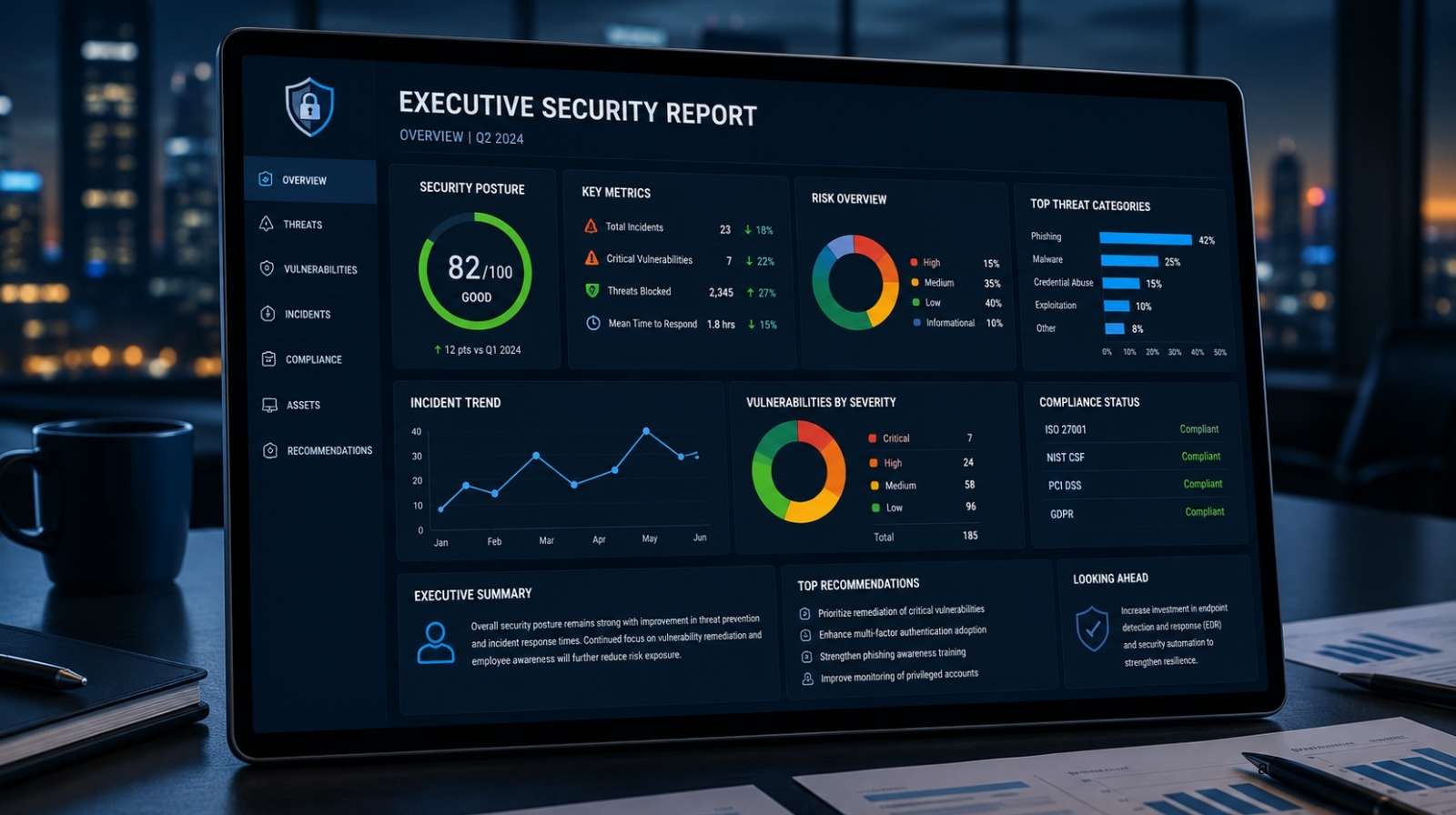
Cybersecurity is no longer a technical issue discussed only within information technology teams. It has become a business priority that influences operational resilience, customer trust, regulatory compliance, and long term growth. Executive leaders are expected to make informed decisions about cyber risk, yet many struggle to understand complex security data presented in technical reports. This is where an Executive Security Report becomes an invaluable resource. It transforms technical security information into meaningful business insights that help executives understand risks, measure performance, and make confident decisions.
Security teams collect enormous amounts of data every day. Security platforms generate alerts, vulnerability scanners identify weaknesses, endpoint protection solutions detect suspicious behavior, and cloud security tools monitor changing environments. While this information is valuable, it is often presented in formats designed for analysts rather than business leaders. Executives need concise, actionable insights instead of thousands of technical events.
An Executive Security Report bridges this gap by converting technical findings into business focused intelligence. Instead of overwhelming leadership with security jargon, it provides a clear picture of the organization’s security posture, highlights emerging risks, and explains how cybersecurity supports business objectives.
What Is an Executive Security Report?
An Executive Security Report is a high level summary of an organization’s cybersecurity posture designed specifically for business leaders, executives, board members, and decision makers. Unlike operational reports that focus on individual alerts or technical events, executive reports provide strategic visibility into the effectiveness of the overall cybersecurity program.
The purpose of the report is not simply to display security metrics. It is to explain what those metrics mean, why they matter, and how they affect the business. A well designed report enables executives to quickly understand current risks, evaluate security performance, and prioritize future investments without requiring deep technical knowledge.
An effective Executive Security Report presents information in a way that is clear, concise, and relevant to business objectives.
Why Executive Visibility Matters
Cybersecurity decisions increasingly influence business success. Whether an organization is expanding into new markets, adopting cloud technologies, or supporting remote employees, cyber risk affects every major business initiative.
Unfortunately, many executives receive reports that contain technical terminology, raw security data, and complex dashboards that are difficult to interpret. Without meaningful context, leadership may struggle to determine whether security investments are reducing risk or whether additional action is required.
An Executive Security Report solves this problem by translating cybersecurity performance into business language. It helps leadership understand current challenges, identify important trends, and evaluate whether security initiatives are aligned with organizational priorities.
Better visibility leads to better decisions, stronger governance, and improved accountability across the organization.
Turning Security Metrics Into Business Intelligence
Collecting security metrics is only the first step. The real value comes from understanding what those metrics reveal about organizational risk.
For example, a report may show an increase in phishing attempts over the past quarter. Rather than simply presenting the number of attacks, an executive report explains whether existing controls successfully blocked those threats, whether employees require additional awareness training, and whether the attacks created measurable business risk.
Similarly, vulnerability data becomes more valuable when presented in terms of business impact. Instead of listing hundreds of vulnerabilities, an Executive Security Report highlights the systems that present the highest operational risk and explains why timely remediation is important.
This approach allows executives to focus on strategic decisions rather than technical details.
What Should an Executive Security Report Include?
A meaningful report should provide a balanced overview of the organization’s cybersecurity program.
Leadership benefits from understanding current security posture, significant threats observed during the reporting period, vulnerability trends, incident response performance, compliance status, and areas that require additional investment.
The report should also include meaningful performance indicators that demonstrate progress over time. Trends often provide more value than isolated numbers because they show whether cybersecurity capabilities are improving or declining.
Business context is equally important. Every finding should explain how it affects operational resilience, regulatory compliance, customer trust, or financial risk.
When security information is connected to business outcomes, executives can make more informed decisions about future priorities.
Supporting Better Governance
Strong cybersecurity governance depends on accurate information and regular communication between security teams and executive leadership.
An Executive Security Report supports this relationship by creating a consistent method for measuring security performance. It enables leadership to review progress against strategic objectives, evaluate investment decisions, and ensure accountability across the organization.
The report also helps establish cybersecurity as an ongoing business discussion rather than a topic that receives attention only after a security incident.
Organizations with mature reporting practices often demonstrate stronger collaboration between security leaders and executive management because everyone is working from the same information.
Helping Security Teams Demonstrate Value
Security teams invest significant effort in protecting organizational assets, responding to incidents, and improving security controls. However, demonstrating the value of these activities can be difficult without effective reporting.
An Executive Security Report helps security leaders communicate achievements in terms that resonate with business stakeholders. Instead of focusing solely on technical accomplishments, the report explains how security initiatives reduce risk, improve resilience, support compliance, and enable business growth.
This visibility strengthens executive confidence while helping justify future investments in cybersecurity programs.
Common Challenges Without Executive Reporting
Organizations that lack effective executive reporting often experience communication gaps between technical teams and business leadership.
Executives may have limited visibility into emerging risks, making it difficult to prioritize cybersecurity initiatives. Security teams may struggle to demonstrate measurable progress because reports focus on technical activities rather than business outcomes.
In some cases, leadership may underestimate cyber risk simply because available information is too technical to interpret quickly.
An Executive Security Report addresses these challenges by presenting clear, actionable information that supports strategic decision making.
Why Every Organization Needs an Executive Security Report
Every organization generates security data, but not every organization transforms that data into meaningful intelligence.
As businesses continue to expand their digital operations, cyber risks become more complex and more closely connected to organizational success. Executive leaders need timely insights that help them understand changing threats, evaluate security performance, and make informed decisions about investments, governance, and operational resilience.
An Executive Security Report provides this visibility by presenting cybersecurity information in a format designed specifically for business decision makers. It creates alignment between security teams and executive leadership while supporting continuous improvement across the organization.
Make Better Security Decisions With Confidence
Effective cybersecurity depends on informed leadership. Organizations that understand their risks are better positioned to reduce exposure, strengthen resilience, and respond confidently to emerging threats.
The Executive Security Report from Cybersecurity Threat AI helps transform technical security information into actionable business intelligence. Whether you are a chief executive officer, chief information security officer, board member, or business leader, the report provides the clarity needed to understand your organization’s cybersecurity posture and make strategic decisions with confidence.
As cyber threats continue to evolve, executive visibility becomes more important than ever. Investing in meaningful security reporting today can improve governance, strengthen business resilience, and support smarter cybersecurity decisions for years to come.
Frequently Asked Questions
What is an Executive Security Report?
An Executive Security Report is a high level cybersecurity report that summarizes security posture, business risks, security performance, and key trends in a format designed for executives and board members.
Who should use an Executive Security Report?
Chief executive officers, chief information security officers, board members, information technology leaders, compliance teams, and business decision makers can all benefit from executive level cybersecurity reporting.
How often should an Executive Security Report be generated?
Most organizations create executive security reports every month or every quarter, depending on business requirements, compliance obligations, and the pace of organizational change.
Why is executive reporting important in cybersecurity?
Executive reporting helps leadership understand cyber risks, prioritize security investments, improve governance, and make informed business decisions based on meaningful cybersecurity insights.
Start Making Smarter Cybersecurity Decisions
If your organization wants to improve executive visibility into cyber risk, strengthen governance, and communicate security performance more effectively, use the Executive Security Report from Cybersecurity Threat AI. Clear reporting leads to better decisions, stronger security programs, and greater confidence in your organization’s ability to respond to an evolving threat landscape.