



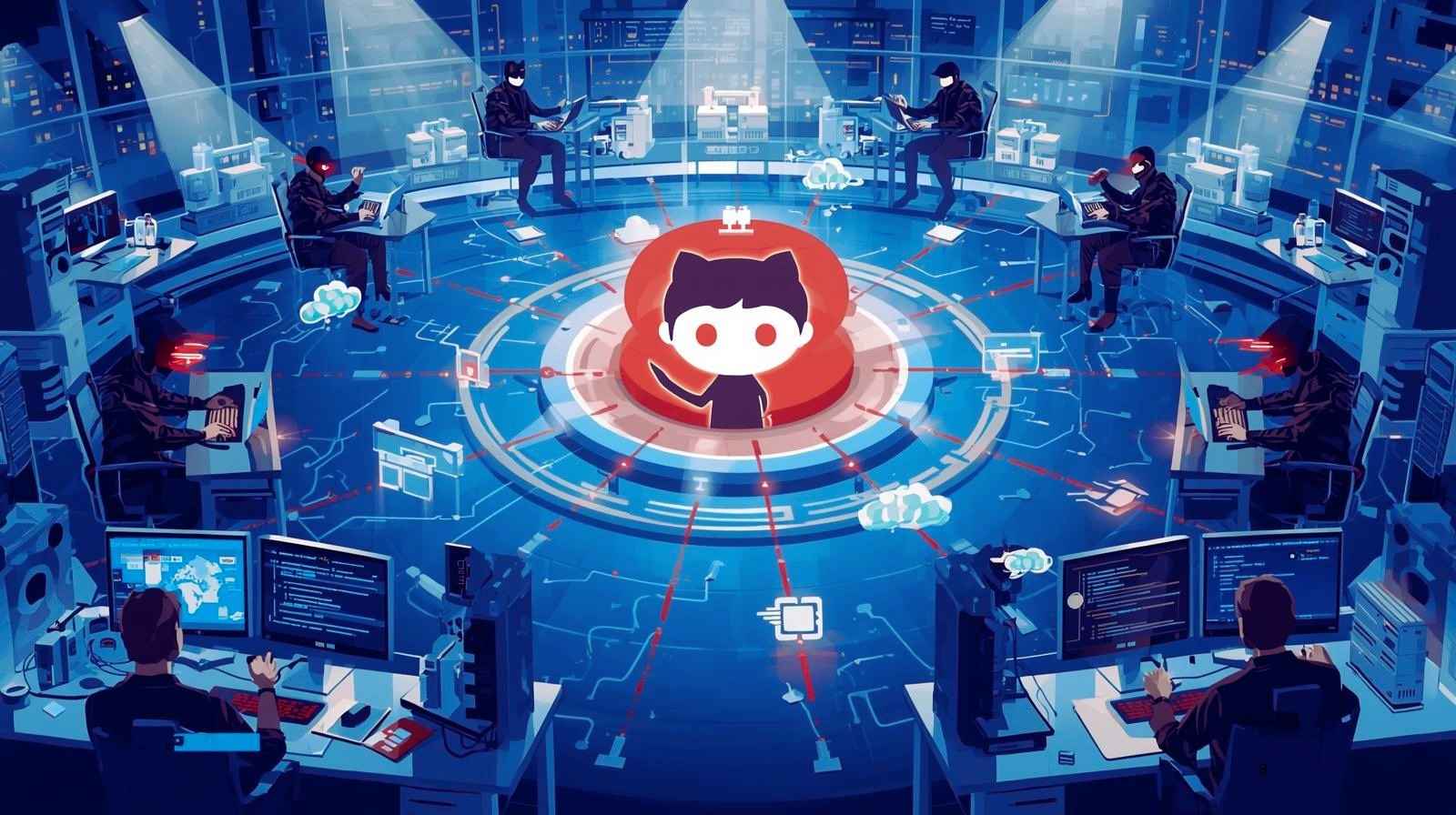
The recent GitHub supply chain attack campaign linked to TeamPCP is another reminder that modern software development environments have become a prime target for attackers. In many enterprise environments, GitHub repositories, CI/CD pipelines, developer workstations, and extension ecosystems now hold the same strategic value as domain controllers or identity infrastructure.
What makes this campaign notable is not just the compromise itself, but the way attackers leveraged trust already embedded inside development workflows. That trust is difficult to monitor because most organizations still prioritize production infrastructure over developer ecosystems. In practice, that creates blind spots around repository access, package execution, token misuse, and extension installation behavior.
The GitHub supply chain attack also highlights a growing trend across the threat landscape. Attackers increasingly prefer indirect compromise paths that scale efficiently across multiple victims. Rather than targeting one organization at a time, they compromise a trusted component that many organizations already use.
What is the GitHub Supply Chain Attack Campaign Linked to TeamPCP
The GitHub supply chain attack associated with TeamPCP refers to malicious activity tied to compromised or weaponized developer resources distributed through trusted development channels. Reports connected to the campaign indicate abuse involving repositories, developer tooling, and suspicious VSCode extensions that enabled malicious execution inside developer environments.
From a defensive standpoint, this is a classic software supply chain compromise. Instead of attacking hardened perimeter systems directly, attackers attempt to insert malicious functionality into tools developers already trust. Once execution occurs inside a workstation or build pipeline, attackers can pivot toward credentials, repositories, secrets, cloud infrastructure, or downstream software artifacts.
In real environments, this matters because developer systems often maintain elevated permissions. Many engineering workstations have access to production repositories, container registries, cloud environments, and deployment credentials. A compromise in that space can rapidly expand beyond a single endpoint.
Why It Matters in Real Environments
Security teams frequently underestimate how exposed development ecosystems have become. In many SOC investigations, developer endpoints generate large volumes of normal administrative activity, which makes malicious behavior harder to distinguish from legitimate engineering work.
A malicious VSCode extension, for example, may appear harmless during initial review. Developers routinely install extensions for debugging, automation, syntax support, or cloud integration. However, once a malicious extension gains execution privileges, it can monitor repositories, harvest authentication tokens, or execute unauthorized scripts in the background.
The operational impact becomes even more severe in organizations practicing rapid DevOps deployment models. A compromised package or repository may propagate into staging and production environments before defenders identify the original intrusion.
In several real world incidents across the industry, supply chain compromises were not initially discovered through malware detection. Instead, organizations identified downstream anomalies such as unauthorized code commits, suspicious CI/CD activity, or unexpected outbound connections from build infrastructure.
How It Works (High Level Only)
The GitHub supply chain attack campaign appears to rely on abuse of trusted development workflows rather than direct exploitation of traditional perimeter vulnerabilities.
At a high level, attackers attempt to position malicious content where developers naturally interact with it. That may include:
- Weaponized VSCode extensions
- Compromised repositories
- Malicious package dependencies
- Fake developer tooling
- Stolen GitHub authentication tokens
Once execution occurs inside the developer environment, attackers can collect sensitive data or establish persistence. In many cases, they focus on repository access, credential harvesting, API tokens, SSH keys, and CI/CD secrets.
Importantly, these attacks do not always generate obvious malware indicators. Some activity blends into standard developer operations. Repository cloning, package downloads, automated scripts, and API calls occur constantly in engineering environments. That creates substantial detection complexity.
Attackers also benefit from the decentralized nature of software development. Modern engineering teams often rely on thousands of open source dependencies and extensions. Verifying the integrity of every component at scale remains difficult.
Detection Challenges
Detecting a GitHub supply chain attack is considerably harder than identifying commodity malware infections. Traditional endpoint detection platforms may not immediately classify developer tooling behavior as suspicious because the activity often resembles legitimate engineering tasks.
One major challenge involves token abuse. If attackers obtain valid GitHub credentials or access tokens, they can operate using authenticated sessions that appear normal in logs. In practice, defenders may only notice subtle anomalies such as unusual repository access patterns or authentication activity from unexpected regions.
Another challenge involves extension ecosystems. VSCode extensions operate inside highly trusted development environments and frequently execute scripts or interact with repositories. Security teams rarely maintain deep visibility into extension level telemetry.
SOC analysts also face alert fatigue in engineering environments. Developer systems naturally produce elevated command line activity, scripting behavior, package installation events, and outbound network traffic. That background noise can obscure malicious actions.
Additionally, many organizations lack behavioral baselines for developer workflows. Without historical profiling, distinguishing suspicious repository access from legitimate engineering activity becomes difficult.
Why Traditional Defenses Fall Short
Traditional security controls were largely designed around endpoint malware, phishing, and network intrusion models. Supply chain attacks targeting development ecosystems bypass many of those assumptions.
Signature based detection struggles because malicious repositories or extensions may not initially contain known malware patterns. Similarly, allowlisting approaches often fail because the compromised tools themselves are trusted.
Network monitoring also has limitations. GitHub traffic, package repositories, and developer APIs are legitimate business services. Blocking or heavily restricting them can disrupt engineering operations.
Another weakness involves fragmented telemetry. In many organizations, GitHub logs, endpoint telemetry, cloud identity events, and CI/CD activity remain disconnected across separate platforms. As a result, defenders struggle to correlate suspicious activity across the full attack chain.
In practice, attackers exploit operational trust gaps rather than purely technical vulnerabilities.
How Gurucul Helps Detect GitHub Supply Chain Attacks
Organizations facing GitHub supply chain threats require visibility beyond traditional endpoint monitoring. This is where behavioral analytics and cross platform telemetry become critical.
Gurucul Next-Gen SIEM and Gurucul UEBA provide capabilities that align closely with the detection challenges seen in developer focused attacks.
In the context of malicious VSCode extensions or compromised GitHub workflows, these platforms can help identify:
- Anomalous developer behavior
- Suspicious package execution
- Abnormal repository access patterns
- Token misuse activity
- Lateral movement originating from developer systems
For example, if a developer account suddenly accesses repositories outside its normal pattern while simultaneously generating unusual endpoint activity, behavioral analytics can surface the deviation before broader compromise occurs.
The combination of SIEM telemetry correlation and UEBA driven anomaly detection is especially valuable because supply chain attacks often span multiple control layers. Indicators may appear weak in isolation but become significant when correlated across identity, endpoint, repository, and network telemetry.
Organizations adopting developer centric detection strategies increasingly need this type of contextual analysis rather than relying solely on malware signatures.
Mitigation and Defensive Strategy
Reducing exposure to GitHub supply chain attacks requires both technical controls and operational discipline.
The first priority is strengthening developer identity security. Organizations should enforce phishing resistant MFA, short lived tokens, and strict token rotation policies. Long lived GitHub access tokens remain a significant risk.
Repository governance also matters. Security teams should monitor for unauthorized repository changes, unusual cloning activity, and suspicious branch modifications. Repository access should follow least privilege principles wherever possible.
Extension management is another overlooked area. Enterprises should maintain approved extension policies for development environments and continuously review installed tooling. Blind trust in third party extensions creates unnecessary exposure.
Behavioral monitoring is equally important. Traditional IOC driven detection often misses supply chain abuse because attackers operate through legitimate channels. Organizations need anomaly detection focused on:
- Developer behavior deviations
- Unusual authentication patterns
- Unexpected CI/CD execution
- Abnormal outbound traffic
- Secret access anomalies
In mature environments, integrating GitHub audit logs with SIEM and UEBA platforms significantly improves visibility.
Broader Security Implications
The TeamPCP linked GitHub supply chain attack reflects a larger industry shift. Attackers increasingly target trust relationships instead of hardened infrastructure.
Historically, organizations focused heavily on protecting endpoints, email, and perimeter systems. Today, development ecosystems represent one of the most attractive attack surfaces because compromise can scale downstream into customers, partners, and production software.
This trend also changes incident response priorities. Security teams can no longer isolate software development from enterprise security operations. Developer environments must now be treated as high value infrastructure.
The implications extend beyond technology companies. Any organization building internal applications, automation workflows, or cloud integrations faces similar exposure.
What Organizations Should Do Now
Organizations should immediately review how development environments are monitored and governed.
Start by assessing GitHub authentication practices, token management, and repository access controls. Many compromises succeed because developer credentials remain overprivileged or poorly monitored.
Next, improve telemetry correlation across developer endpoints, CI/CD systems, repositories, and identity platforms. Isolated logging creates blind spots attackers can exploit.
Security teams should also establish behavioral baselines for engineering activity. Without normal usage profiles, anomaly detection becomes unreliable.
Finally, organizations should treat extension ecosystems and third party dependencies as active threat surfaces rather than trusted utilities. Supply chain compromise risk now extends far beyond traditional malware delivery.
Conclusion
The GitHub supply chain attack campaign linked to TeamPCP demonstrates how modern attackers exploit trust embedded inside development ecosystems. These operations are difficult to detect because they blend into legitimate engineering workflows and often avoid traditional malware patterns.
For defenders, the lesson is clear. Development environments are no longer secondary assets. They are operationally critical systems with direct paths into source code, cloud infrastructure, and production deployment pipelines.
Organizations that continue relying solely on perimeter security and signature based detection will struggle against these attacks. Effective defense now depends on behavioral visibility, identity monitoring, repository governance, and cross platform telemetry correlation.
The security teams adapting fastest are the ones treating developer activity as a core component of enterprise threat detection rather than a separate operational domain.
FAQs
What is a GitHub supply chain attack?
A GitHub supply chain attack occurs when attackers compromise trusted development resources such as repositories, packages, or extensions to distribute malicious activity through legitimate software workflows.
Why are malicious VSCode extensions dangerous?
Malicious VSCode extensions can execute inside trusted developer environments, potentially enabling credential theft, repository access abuse, or unauthorized script execution.
How can organizations detect GitHub supply chain attacks?
Organizations should combine SIEM, UEBA, endpoint telemetry, GitHub audit logs, and behavioral analytics to identify anomalous developer activity and suspicious repository access patterns.
Why are software supply chain attacks increasing?
Attackers increasingly target software supply chains because compromising a trusted development component can provide scalable access to multiple organizations simultaneously.
Research and structural guidance for CVE, IOC, and threat intelligence SEO architecture referenced from uploaded cybersecurity content templates and publishing logic.