



Gurucul Named a Leader in the 2025 Gartner Magic Quadrant TM for SIEM 

Read the Report
Close Menu
Cybersecurity Threat & Artificial Intelligence

    Subscribe to Updates

    Get the latest creative news from FooBar about art, design and business.

    [sibwp_form id=1]
    What's Hot

    Massive Instructure Canvas Data Breach Raises Global Education Security Concerns

    May 7, 2026

    Common Cybersecurity Myths That Harm Security Programs

    May 1, 2026

    Rethinking Insider Threat Detection in the Age of Identity Driven Attacks

    April 29, 2026
    X (Twitter) YouTube
    Cybersecurity Threat & Artificial IntelligenceCybersecurity Threat & Artificial Intelligence
    • Home
      • Cybersecurity Glossary
      • AI Glossary
      • Insider Threat Updates
      • Attack Matrix
    • Cybersecurity
      1. Cyber Threat Intelligence
      2. Hacking attacks
      3. Common Vulnerabilities & Exposures
      4. View All

      Massive Instructure Canvas Data Breach Raises Global Education Security Concerns

      May 7, 2026

      Massive Exploitation of Edge Devices: Why This Threat Is Escalating

      April 17, 2026

      Snowflake Credential Theft Campaign: Why This Attack Matters More Than a Zero Day

      April 15, 2026

      APT Data Theft Campaigns Explained: How Cyber Espionage Works

      April 10, 2026

      Massive Exploitation of Edge Devices: Why This Threat Is Escalating

      April 17, 2026

      Snowflake Credential Theft Campaign: Why This Attack Matters More Than a Zero Day

      April 15, 2026

      APT Data Theft Campaigns Explained: How Cyber Espionage Works

      April 10, 2026

      How Ransomware Industry Works

      April 3, 2026

      Top CVEs to Watch in July 2025: AI-Driven Threats and Exploits You Can’t Ignore

      July 8, 2025

      Common Cybersecurity Myths That Harm Security Programs

      May 1, 2026

      Anatomy of the Claude Code Leak: What 500,000 Lines of AI Code Reveal About Future Risks

      April 2, 2026

      Security Policies Every Organization Must Have

      March 13, 2026

      Browser Extensions, Supply-Chain Vulnerabilities, and Early 2026 Threat Trends

      January 9, 2026
    • AI
      1. AI‑Driven Threat Detection
      2. AI‑Powered Defensive Tools
      3. AI‑Threats & Ethics
      4. View All

      Emerging AI-Driven Threats and Defensive Shifts in 2026

      January 7, 2026

      Holiday Panic Rising: AI-Driven Mobile Fraud Is Wrecking Consumer Trust This Shopping Season

      December 5, 2025

      How Artificial Intelligence Identifies Zero-Day Exploits in Real Time | Cybersecurity Threat AI Magazine

      June 28, 2025

      Project Glasswing and AI Model Mythos: The Next Evolution in AI Driven Cyber Threats

      April 22, 2026

      Emerging AI-Driven Threats and Defensive Shifts in 2026

      January 7, 2026

      Gurucul Unveils AI-SOC Analyst: Deep Collaboration Meets Autonomous Security Operations

      August 7, 2025

      ChatGPT Style Assistants for Security Operations Center Analysts | Cybersecurity Threat AI Magazine

      June 28, 2025

      Emerging AI-Driven Threats and Defensive Shifts in 2026

      January 7, 2026

      Holiday Panic Rising: AI-Driven Mobile Fraud Is Wrecking Consumer Trust This Shopping Season

      December 5, 2025

      Deepfake Identity Fraud: Artificial Intelligence’s Role and Defenses | Cybersecurity Threat AI Magazine

      June 28, 2025

      Narrative Warfare: How India Is Being Targeted, How Pakistan Operates It, and What India Must Do to Fight Back

      November 26, 2025

      Cyber Wars, Cyber Threats, and Cybersecurity Will Push Gold Higher

      October 20, 2025

      The Surge in AI Deepfake Enabled Social Engineering

      September 10, 2025

      Perplexity’s Comet Browser: Next-Gen AI-Powered Threat Protection for Secure Web Experiences

      July 25, 2025
    • News
      1. Tech
      2. Gadgets
      3. View All

      Common Cybersecurity Myths That Harm Security Programs

      May 1, 2026

      Anatomy of the Claude Code Leak: What 500,000 Lines of AI Code Reveal About Future Risks

      April 2, 2026

      Security Policies Every Organization Must Have

      March 13, 2026

      Browser Extensions, Supply-Chain Vulnerabilities, and Early 2026 Threat Trends

      January 9, 2026

      Anatomy of the Claude Code Leak: What 500,000 Lines of AI Code Reveal About Future Risks

      April 2, 2026

      Ransomware Campaign Targeting MFT Systems

      March 25, 2026

      Ivanti VPN Zero Day Exploitation: Active Threat, Impact, and Mitigation

      March 25, 2026

      AI Is Emerging as the New Insider: Key Takeaways from the Gurucul 2026 Insider Risk Report

      March 18, 2026
    • Marketing
      1. Cybersecurity Marketing
      2. AI Business Marketing
      3. Case Studies
      4. View All

      Cybersecurity Marketing Strategy for Enterprise Growth

      February 17, 2026

      Cybersecurity Account Based Marketing Services

      December 22, 2025

      Cybersecurity Content Marketing Services

      December 22, 2025

      Cybersecurity Digital Marketing Services

      December 22, 2025

      Cybersecurity Marketing Strategy for Enterprise Growth

      February 17, 2026

      How a Cybersecurity SaaS Grew From 0 to 100 Enterprise Clients in 12 Months

      December 3, 2025

      Why Most AI Startups Fail at Marketing

      June 29, 2025

      Massive Instructure Canvas Data Breach Raises Global Education Security Concerns

      May 7, 2026

      Common Cybersecurity Myths That Harm Security Programs

      May 1, 2026

      Rethinking Insider Threat Detection in the Age of Identity Driven Attacks

      April 29, 2026

      Cybersecurity Metrics That Actually Matter

      April 24, 2026

      Cybersecurity Marketing Strategy for Enterprise Growth

      February 17, 2026

      Cybersecurity Account Based Marketing Services

      December 22, 2025

      Cybersecurity Content Marketing Services

      December 22, 2025

      Cybersecurity Digital Marketing Services

      December 22, 2025
    • Cybersecurity Products
      • SIEM
      • SOC
    • Contact
    X (Twitter) YouTube LinkedIn
    Cybersecurity Threat & Artificial Intelligence
    Home » FUTO Keyboard: Fortifying Your Mobile Privacy Against AI-Powered Data Leaks and Keyboard Tracking Threats
    Featured

    FUTO Keyboard: Fortifying Your Mobile Privacy Against AI-Powered Data Leaks and Keyboard Tracking Threats

    cyber security threatBy cyber security threatJuly 26, 2025Updated:December 11, 2025No Comments5 Mins Read
    Facebook Twitter Pinterest Telegram LinkedIn Tumblr WhatsApp Email
    futo keyboard
    futo keyboard
    Share
    Facebook Twitter LinkedIn Pinterest Telegram Email

    What is FUTO Keyboard?

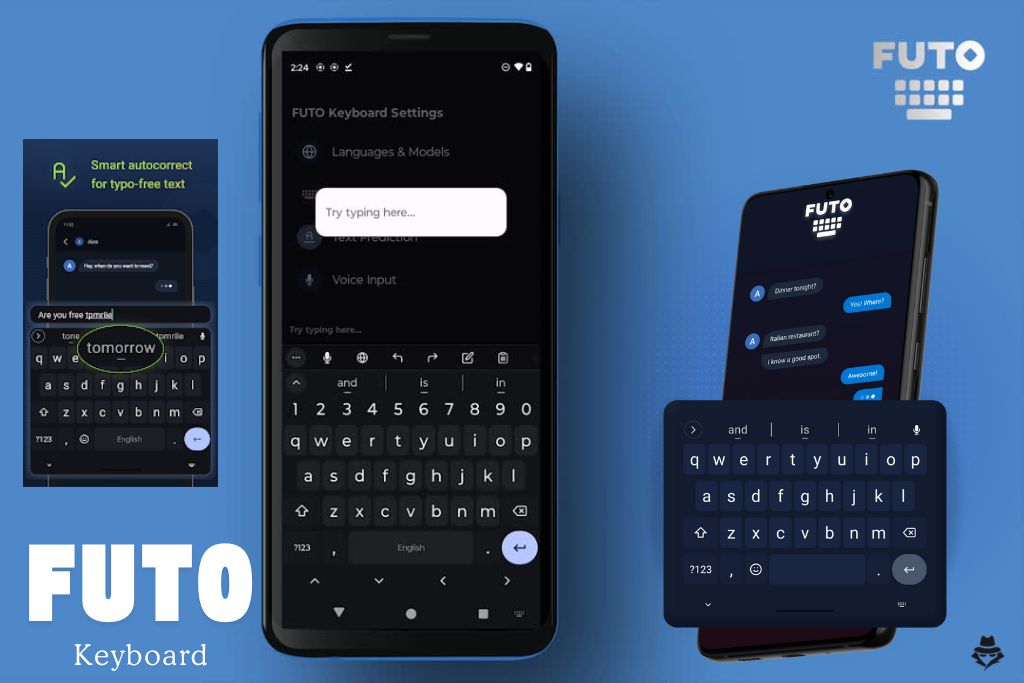
    FUTO Keyboard is a privacy-focused and fully offline keyboard app for Android. Created by the FUTO team, it’s designed for users who want a secure typing experience without their personal data being transmitted or stored online. Unlike many mainstream keyboards, FUTO Keyboard does not connect to the internet for any of its features.

    How FUTO Keyboard Works

    • Offline Operation: The keyboard and all its features operate entirely on your device—there’s no need for an internet connection.
    • No Data Transmission: Everything, including voice input and swipe data (unless you explicitly opt to contribute), remains private and stays on your device.
    • Simple Setup: Available via Google Play Store, F-Droid, Obtainium, or direct APK download, setup only requires installation and selecting FUTO as your default keyboard.
    Download futo keyboard

    Privacy Benefits

    • No Internet Access: Many popular keyboards send data to cloud servers for autocorrect, voice input, or analytics. FUTO Keyboard deliberately blocks internet access for the core keyboard, ensuring nothing leaves your device.
    • No Data Collection: Your keystrokes, voice recordings, and predicted words are never transmitted or used for advertising.
    • Transparent Development: Open-source code and community engagement contribute to trustworthiness.

    Key Features vs. Major Keyboards

    FeatureFUTO KeyboardGboard (Google)Samsung KeyboardMicrosoft SwiftKey
    Offline CoreYes1Partial (some features require internet)PartialPartial
    Privacy-FirstYes1No (cloud sync, analytics)NoNo
    Voice Input OfflineYes (optional add-on)1Internet requiredInternet requiredInternet required
    Swipe TypingYes (alpha, offline)Yes (cloud enhanced)YesYes
    Smart AutocorrectYes1YesYesYes
    Predictive TextYes (offline)Yes (cloud & local)YesYes
    Theme PersonalizationYes1YesYesYes
    No Ads/TrackersYes1NoNoNo
    One-time LicenseYesFree (data-driven)Free (device-locked)Free (data-driven)

    How to Install and Use FUTO Keyboard

    1. Download:
      • From Google Play Store, F-Droid, or Obtainium, or use the standalone APK.
    2. Install:
      • Follow your device’s prompts to install. For APKs, ensure you allow “Unknown Sources” on your device.
    3. Set as Default Keyboard:
      • Go to Settings > System > Languages & input > Virtual keyboard > Manage keyboards. Activate FUTO Keyboard.
    4. Personalize:
      • Select themes, enable/disable features like swipe typing, autocorrect, etc.
    5. Enable Voice Input (Optional):
      • Install the FUTO Voice Input add-on for offline voice recognition.
    6. Start Typing:
      • Use the keyboard for everyday tasks, secure in knowing your data stays private.

    Feature Highlights

    • Offline Voice Input: Speech-to-text that works without the internet.
    • Swipe to Type: Drag your finger to type faster. You can opt-in to help FUTO build a swipe dataset, but it’s not required.
    • Smart Autocorrect: Advanced auto-correct supported locally without sending words to servers.
    • Predictive Text: Local suggestions as you type.
    • Custom Themes: Match your keyboard to your style.

    Community and Support

    • Support: License purchase is one-time; it helps FUTO remain ad-free and funded.
    • Community Involvement: Feedback and contributions are welcomed, especially for swipe typing improvements.
    • Open Source: Code and development are transparent for added security.

    If you seek privacy and offline functionality, FUTO Keyboard sets itself apart from mainstream keyboards that typically prioritize data collection and cloud-based features. It’s still in alpha, so expect some bugs or missing features, but it’s under active development.

    FUTO Keyboard in Cybersecurity

    FUTO Keyboard serves as a strong tool in cybersecurity by addressing common vulnerabilities in mobile typing. Mainstream keyboards like Gboard often transmit keystroke data to cloud servers for AI-driven features, creating risks of interception by hackers or unauthorized surveillance. In contrast, FUTO’s fully offline design prevents such data leaks, making it ideal for users handling sensitive information, such as cybersecurity professionals or those in high-risk environments.

    • Mitigating Keylogging Threats: By keeping all processing local, it blocks remote keyloggers that exploit cloud connections in apps like SwiftKey or Samsung Keyboard.
    • Defense Against AI Surveillance: It avoids feeding user data into AI models used by big tech for training, reducing exposure to potential breaches where personal inputs could be harvested.
    • Secure for Sensitive Work: Recommended for scenarios like secure communications or avoiding metadata tracking, as it doesn’t require internet permissions that could be abused by malware.
    • Integration with Security Practices: Pair it with encrypted messaging apps for layered protection, ensuring typed data remains confined to your device.

    If you seek privacy and offline functionality, FUTO Keyboard sets itself apart from mainstream keyboards that typically prioritize data collection and cloud-based features. It’s still in alpha, so expect some bugs or missing features, but it’s under active development.

    FUTO Keyboard in Cybersecurity

    FUTO Keyboard serves as a strong tool in cybersecurity by addressing common vulnerabilities in mobile typing. Mainstream keyboards like Gboard often transmit keystroke data to cloud servers for AI-driven features, creating risks of interception by hackers or unauthorized surveillance. In contrast, FUTO’s fully offline design prevents such data leaks, making it ideal for users handling sensitive information, such as cybersecurity professionals or those in high-risk environments.

    • Mitigating Keylogging Threats: By keeping all processing local, it blocks remote keyloggers that exploit cloud connections in apps like SwiftKey or Samsung Keyboard.
    • Defense Against AI Surveillance: It avoids feeding user data into AI models used by big tech for training, reducing exposure to potential breaches where personal inputs could be harvested.
    • Secure for Sensitive Work: Recommended for scenarios like secure communications or avoiding metadata tracking, as it doesn’t require internet permissions that could be abused by malware.
    • Integration with Security Practices: Pair it with encrypted messaging apps for layered protection, ensuring typed data remains confined to your device.

    If you seek privacy and offline functionality, FUTO Keyboard sets itself apart from mainstream keyboards that typically prioritize data collection and cloud-based features. It’s still in alpha, so expect some bugs or missing features, but it’s under active development.

    Visual Reference

    Currently, no high-quality images were found during this search. For updated screenshots or visuals, please refer directly to the official FUTO Keyboard site or documentation.

    1. https://keyboard.futo.org

    Share. Facebook Twitter Pinterest LinkedIn Tumblr Email
    cyber security threat
    cyber security threat
    • Website

    Related Posts

    Massive Instructure Canvas Data Breach Raises Global Education Security Concerns

    May 7, 2026

    Common Cybersecurity Myths That Harm Security Programs

    May 1, 2026

    Rethinking Insider Threat Detection in the Age of Identity Driven Attacks

    April 29, 2026

    Cybersecurity Metrics That Actually Matter

    April 24, 2026

    Project Glasswing and AI Model Mythos: The Next Evolution in AI Driven Cyber Threats

    April 22, 2026

    Massive Exploitation of Edge Devices: Why This Threat Is Escalating

    April 17, 2026

    Comments are closed.

    Top Picks
    Editors Picks

    Massive Instructure Canvas Data Breach Raises Global Education Security Concerns

    May 7, 2026

    Common Cybersecurity Myths That Harm Security Programs

    May 1, 2026

    Rethinking Insider Threat Detection in the Age of Identity Driven Attacks

    April 29, 2026

    Cybersecurity Metrics That Actually Matter

    April 24, 2026
    Advertisement
    Demo
    About Us
    About Us

    Artificial Intelligence & AI, The Pulse of Cybersecurity Powered by AI.

    We're accepting new partnerships right now.

    Email Us: info@cybersecuritythreatai.com

    Our Picks

    Cybersecurity Marketing Strategy for Enterprise Growth

    February 17, 2026

    Cybersecurity Account Based Marketing Services

    December 22, 2025

    Cybersecurity Content Marketing Services

    December 22, 2025
    Top Reviews
    X (Twitter) YouTube LinkedIn
    • Password Reset
    • Account
    • Logout
    • Members
    • Register
    • Login
    • User
    © 2026 Cybersecurity threat & AI Designed by Cybersecurity threat & AI .

    Type above and press Enter to search. Press Esc to cancel.

    Grow your AI & Cybersecurity Business.
    Powered by Joinchat
    HiHello , welcome to cybersecuritythreatai.com, we bring reliable marketing support for ai and cybersecurity businesses.
    Can we help you?
    Open Chat