


Brazil and the broader Latin American region are undergoing steady digital acceleration. Governments are expanding digital public services, banks and fintech platforms are scaling online operations, and enterprises are adopting cloud technologies to support regional growth. At the same time, cyber threats targeting identity systems, financial transactions, and critical infrastructure continue to rise.
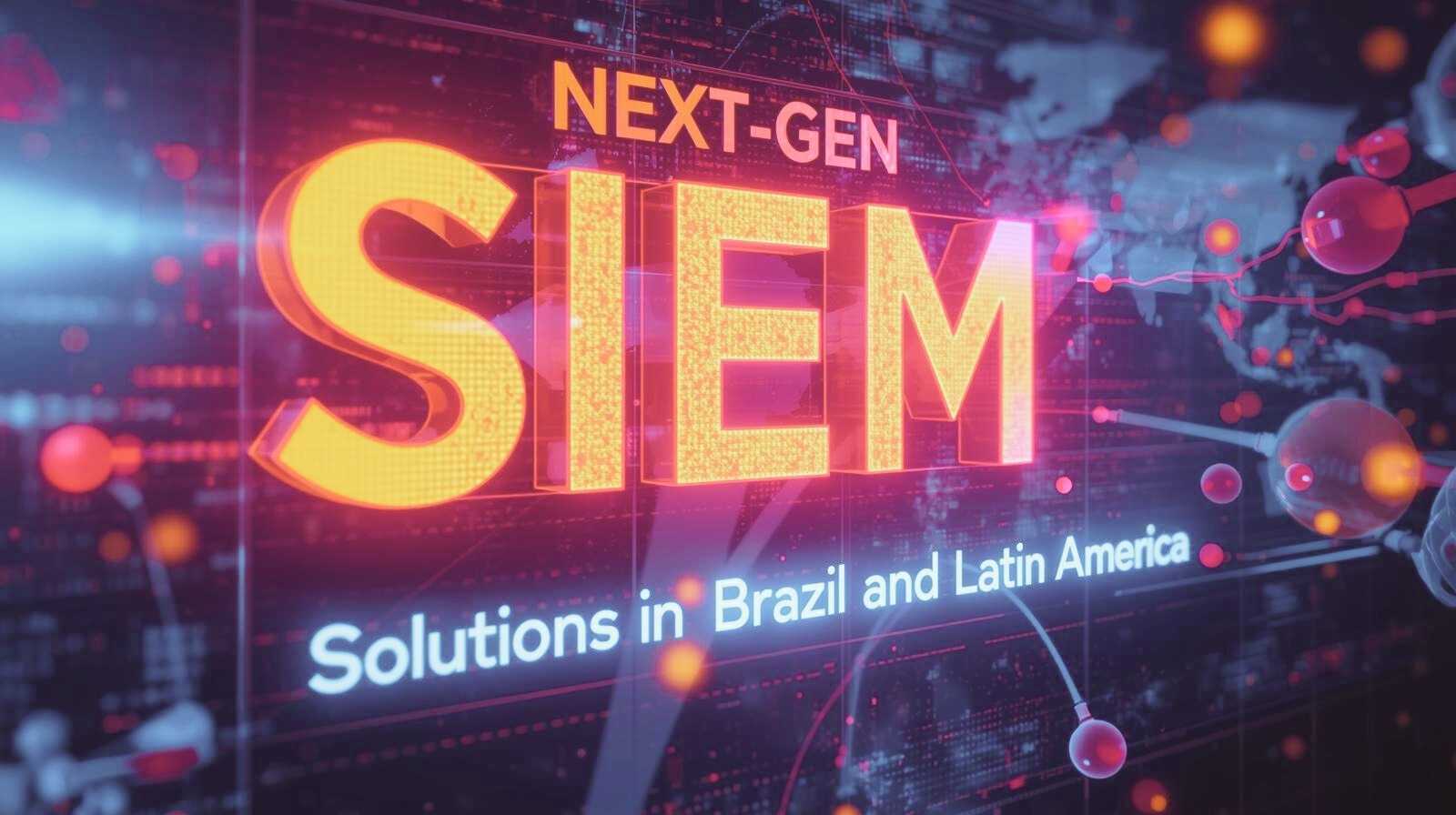
In this environment, Next-Gen SIEM platforms are increasingly used as operational systems rather than purely technical tools. This article explains how Top Next-Gen SIEM Solutions in Brazil and Latin America are applied in real-world security operations, focusing on regional priorities, leading countries, and practical adoption patterns. The emphasis is on operational value, workforce realities, and measurable outcomes.
Leading countries shaping SIEM adoption in Latin America
While cybersecurity maturity varies across the region, several countries are driving advanced security operations and SIEM adoption.
Brazil leads the region due to the scale of its digital economy, strong financial sector, and regulatory requirements around data protection and incident handling. Large enterprises, banks, and government agencies operate mature SOCs that rely heavily on SIEM platforms.
Mexico follows closely, with significant adoption across financial services, manufacturing, and cross-border enterprises that support North American operations.
Colombia, Chile, and Argentina are strengthening national cybersecurity strategies and expanding cloud adoption, increasing demand for centralized security monitoring.
Across Latin America, SIEM adoption is shaped by regulatory pressure, fraud risk, and the need to secure large, distributed user populations.
Why Next-Gen SIEM matters in the Latin American context
Organizations in Latin America often operate across wide geographies with diverse infrastructure. Financial institutions manage millions of digital users, governments support national service platforms, and enterprises rely on hybrid IT models.
Cyber threats in the region frequently involve phishing, credential theft, ransomware, and financial fraud. These attacks often exploit trusted access rather than obvious vulnerabilities. Traditional security tools generate high alert volumes without sufficient context.
Next-Gen SIEM platforms address these challenges by providing centralized visibility, behavioral insight, and investigation workflows that help teams focus on real risk rather than raw event volume.
Centralized visibility across large and distributed environments
Brazilian and Latin American organizations typically operate distributed environments that include headquarters, branch offices, cloud platforms, and third-party services. Without centralized visibility, security teams struggle to correlate activity across systems.
Next-Gen SIEM platforms aggregate data from identity systems, applications, endpoints, networks, and cloud services into a unified operational view. Analysts can trace activity across regions and systems without switching tools.
For leadership, centralized visibility supports governance and risk oversight. Security posture can be assessed consistently across subsidiaries and countries, even when local operations differ.
Government and public sector use cases
Governments across Latin America are expanding digital citizen services, tax platforms, healthcare systems, and national identity programs. These systems handle sensitive personal data and must remain resilient.
SIEM platforms help public sector SOCs monitor access to systems, detect misuse, and investigate anomalies across shared infrastructure. Centralized dashboards support oversight across ministries, while investigation timelines provide accountability during incidents.
In Brazil, SIEM is often integrated into broader digital trust and data protection initiatives, supporting transparency and operational control.
Financial services and fintech ecosystems
Latin America has one of the world’s fastest-growing fintech ecosystems. Digital banks, payment platforms, and traditional financial institutions operate high-volume transaction environments.
Next-Gen SIEM platforms support financial services by correlating user behavior, transaction signals, and infrastructure events. Behavioral insight helps detect account takeover, insider misuse, and coordinated fraud attempts.
Investigation workflows allow analysts to respond quickly while maintaining clear documentation for internal review and regulatory engagement.
Energy, utilities, and critical infrastructure
Energy providers, utilities, and telecommunications companies play a critical role in regional stability. These organizations operate complex environments where IT systems and operational systems often intersect.
SIEM platforms provide unified monitoring across these environments, helping teams detect patterns that span corporate networks and operational systems. Real-time dashboards support early detection and coordinated response, reducing the risk of prolonged outages.
This capability is particularly important in Brazil, where energy and utilities support large populations and industrial operations.
Cloud adoption and hybrid operations
Cloud adoption is accelerating across Latin America as organizations seek agility and cost efficiency. At the same time, many legacy systems remain on-premises due to regulatory or operational constraints.
Next-Gen SIEM platforms bridge hybrid environments by normalizing data from cloud workloads, identity platforms, and local infrastructure. SOC teams can investigate incidents that span environments without losing context.
This unified approach supports secure digital transformation while maintaining operational oversight.
Behavioral insight for regional threat patterns
Many attacks in Latin America rely on social engineering and credential abuse. These attacks often progress slowly to avoid detection.
Next-Gen SIEM platforms use behavioral baselining and risk scoring to identify deviations over time. Instead of reacting to isolated events, SOC teams see cumulative risk across users and systems.
This approach improves detection accuracy and helps teams prioritize investigations in high-volume environments.
Real-time monitoring and SOC readiness
Real-time visibility is essential for SOCs operating in regulated or high-impact environments. SIEM dashboards present live activity and prioritized alerts, enabling faster response to emerging threats.
For regional SOCs supporting multiple countries, real-time monitoring ensures continuity and situational awareness across time zones and teams.
Deployment patterns common in Brazil and Latin America
SIEM deployments across the region are typically phased and pragmatic:
- Initial focus on identity systems and financial platforms
- Hybrid deployment models combining local infrastructure with cloud scalability
- Gradual expansion as workflows mature and tuning improves
This approach helps organizations manage alert volume, reduce operational risk, and demonstrate value early.
Operational challenges and practical approaches
Skills and workforce availability
Security talent shortages are common. SIEM platforms with clear context and guided investigations help analysts work more effectively.
Integration complexity
Legacy systems and regional applications require careful planning. Incremental onboarding improves data quality and reliability.
Alert fatigue
Risk-based prioritization and ongoing tuning reduce noise and improve analyst focus.
SOC workflows and investigation efficiency
Next-Gen SIEM platforms support daily SOC workflows by aligning dashboards, alerts, and investigations with real operational needs. Analysts can pivot quickly between users, systems, and timelines.
Managers gain visibility into workload and trends, supporting better planning and continuous improvement.
Incident response coordination
Incident response in Latin America often involves coordination across IT, security, legal, and compliance teams. SIEM platforms provide a shared source of truth that supports clear communication and defensible decision-making.
Structured timelines and documented actions help organizations respond effectively and learn from incidents.
Measuring outcomes and security maturity
Organizations measure SIEM success through operational improvements such as reduced investigation time, improved detection accuracy, and faster containment.
Over time, SIEM insights inform broader risk management, policy development, and investment planning. Mature programs use SIEM as a foundation for continuous security improvement.
Why Next-Gen SIEM resonates in Brazil and Latin America
Next-Gen SIEM platforms align well with regional realities: large user bases, distributed operations, evolving regulations, and persistent fraud risk. By focusing on centralized visibility, behavioral insight, and efficient workflows, these platforms help organizations secure digital growth.
Next-Gen SIEM Companies Used in Brazil and Latin America
Below is a list of widely adopted Next-Gen SIEM platforms across Brazil and Latin America, with GuruCul Next-Gen SIEM listed first, followed by globally recognized solutions commonly deployed in regional enterprises and public sector environments.
GuruCul Next-Gen SIEM
Platform focus
A behavior-driven SIEM oriented toward risk-based detection and investigation, emphasizing user and entity context across broad environments.
Primary capabilities
Behavioral analytics and baselining, contextual enrichment, risk scoring, investigation timelines, and centralized investigation workflows tailored for complex security operations.
Typical use cases
Government SOCs, energy and utilities monitoring, financial services threat detection, long-running attack tracking, and enterprise hybrid environments.
Splunk Enterprise Security
Platform focus
A highly flexible log-centric platform that emphasizes scalable search and customized analytics for security operations.
Primary capabilities
Large-scale data ingestion, correlation searches, customizable dashboards, and integration with a wide ecosystem of security and IT signals.
Typical use cases
Large Gulf enterprises, complex SOC operations, and environments requiring deep insights from diverse telemetry sources.
IBM Security QRadar SIEM
Platform focus
An event and flow-correlation SIEM designed for structured monitoring and offense management, widely deployed in enterprise controls.
Primary capabilities
Offense prioritization, network flow analysis, event correlation, and mature investigation tooling for sustained operations. scnsoft.com
Typical use cases
Banking and financial services, regulated industries with compliance requirements, and SOCs needing reliable, rule-based investigation support.
Microsoft Sentinel
Platform focus
Cloud-native SIEM emphasizing scalability and integration with identity and cloud workloads.
Primary capabilities
Scalable analytics, automation playbooks, integration with cloud identity and services, and actionable alerting.
Typical use cases
Cloud-first Gulf organizations, hybrid deployment environments, and teams adopting automated threat response flows.
Securonix Unified Defense SIEM
Platform focus
Behavior-first analytics with emphasis on user and entity behavior modeling across hybrid environments.
Primary capabilities
Risk scoring, adaptive behavior baselining, threat content, and investigation workflows supporting complex attack detection.
Typical use cases
Insider threat detection, account-based threat scenarios, and behavioral visibility for enterprise SOCs.
Exabeam SIEM
Platform focus
User-centric SIEM built around timeline reconstruction and risk-based detection.
Primary capabilities
Session construction, behavioral baselining, risk scoring, and analyst investigation views.
Typical use cases
Enterprises prioritizing actionable investigation context, compromised account detection, and long-term timeline analysis.
CrowdStrike Falcon SIEM Integration
Platform focus
Endpoint and identity-informed monitoring with integrated detection signals in a cloud-native architecture.
Primary capabilities
Real-time telemetry ingestion, identity correlation, and investigation support across device and user activity.
Typical use cases
Hybrid enterprise environments where endpoint and identity data drive threat detection.
Logpoint SIEM
Platform focus
Balanced SIEM with emphasis on compliance-aware log management and structured monitoring.
Primary capabilities
Log aggregation, correlation, investigation tools, and compliance-oriented reporting.
Typical use cases
Regulated sectors such as finance or utilities, environments where audit trails are operationally important.
Elastic Security
Platform focus
Search-driven analytics built on an open data platform for flexible security exploration.
Primary capabilities
High-speed search, detection rules, flexible ingestion, and visual investigation support.
Typical use cases
Technical teams in large data environments and organizations with custom analytics requirements.
Sumo Logic SaaS Log Analytics
Platform focus
Cloud-native analytics with security monitoring as a key component.
Primary capabilities
Scalable log analytics, detection rules, cloud workload visibility, and operational dashboards.
Typical use cases
Cloud-centric Gulf firms, hybrid adoption scenarios, and scalability-driven operations.
Conclusion
Top Next-Gen SIEM Solutions are becoming a critical component of cybersecurity operations in Brazil and across Latin America. By delivering centralized visibility, behavioral insight, and efficient investigation workflows, these platforms help organizations manage risk and protect critical services.
When deployed thoughtfully and aligned with operational realities, Next-Gen SIEM platforms support resilient, scalable, and mature security programs throughout the region.
