



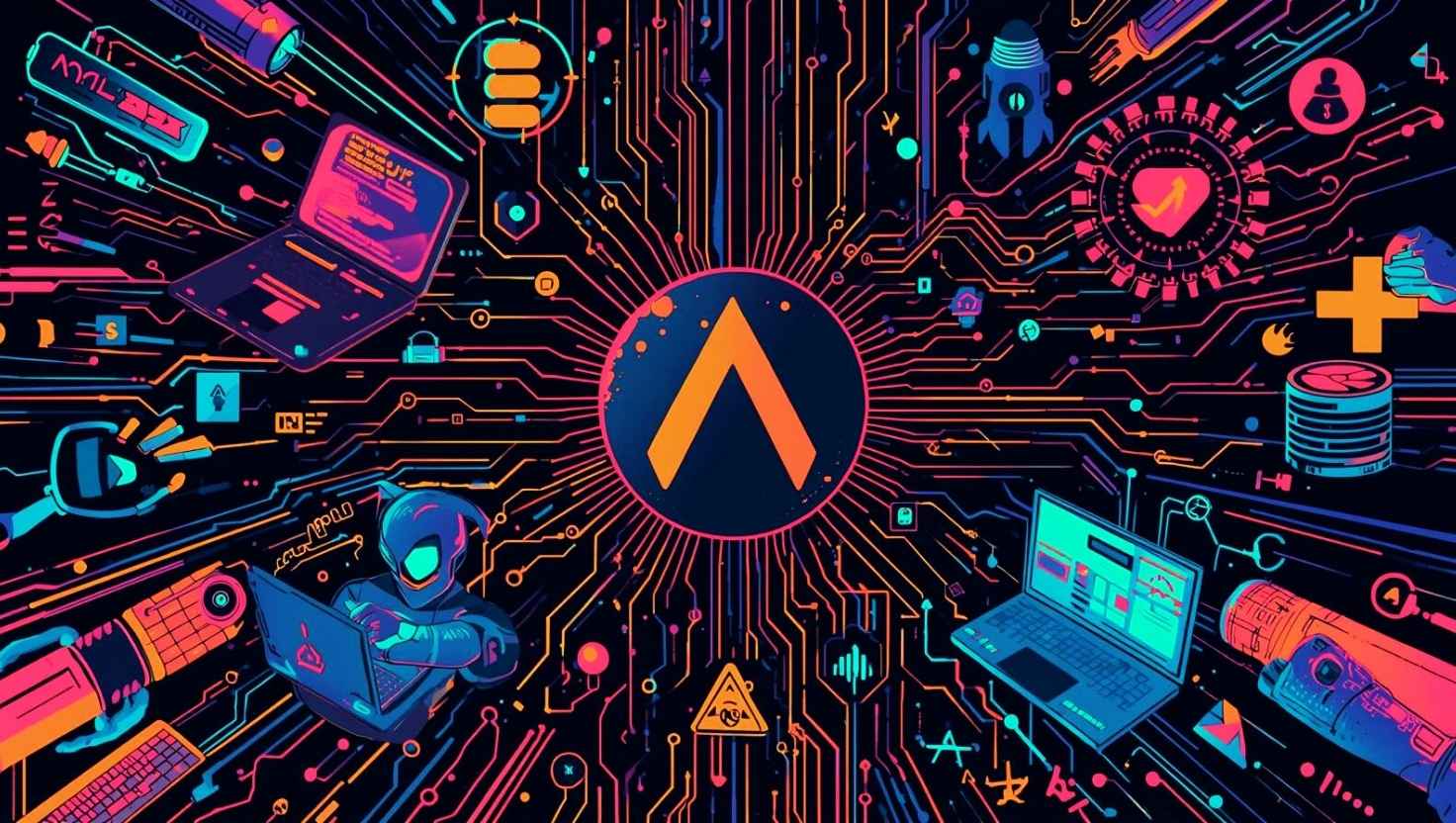
Cyber threats continue to evolve with AI Botnets, but few developments raise as much concern as AI-powered botnets. Unlike traditional botnets, these systems do not rely only on static commands or simple automation. Instead, they learn, adapt, and make decisions in real time.
As a result, AI botnets represent a major shift in how cyberattacks operate. At the same time, the same technology also offers powerful defensive and ethical applications. Understanding both sides is now essential for modern cybersecurity teams.
What Are AI Botnets?
An AI botnet is a network of compromised devices that uses artificial intelligence or machine learning to coordinate attacks. Traditional botnets follow fixed instructions from a command-and-control server. In contrast, AI botnets can analyse environments, change behaviour, and optimise attack strategies without constant human input.
Because of this autonomy, AI botnets can react faster and remain active for longer periods. They also generate less predictable traffic, which makes detection harder.
Why AI Botnets Are a Serious Cybersecurity Threat
AI botnets increase risk because they remove many limitations attackers once faced. Instead of manually adjusting tactics, attackers can allow the system to learn and improve on its own.
Key threat factors include adaptive behaviour, faster decision-making, and large-scale automation. AI-driven bots can dynamically alter attack patterns, avoid detection tools, and exploit weaknesses as soon as they appear. Moreover, these botnets can coordinate attacks across thousands of nodes with minimal oversight.
As a result, security teams face attackers that move faster, stay quieter, and persist longer inside networks.
How Hackers Use AI Botnets
From an offensive perspective, AI botnets provide significant advantages. Attackers use them to automate complex tasks that once required skilled operators.
For example, AI botnets can optimise phishing campaigns by analysing which messages perform best. They can adjust malware behaviour to evade endpoint detection systems. In addition, they can scan networks continuously to identify weak credentials or exposed services.
Because the system learns over time, attacks often become more effective the longer the botnet remains active.
AI Botnets and Modern Attack Scenarios
AI botnets already influence several attack categories. These include credential stuffing, distributed denial-of-service attacks, data exfiltration, and reconnaissance-driven intrusions.
In credential attacks, AI models learn which login patterns succeed and adapt attempts accordingly. During DDoS attacks, AI helps balance traffic volumes to bypass rate-limiting controls. For reconnaissance, botnets quietly map networks and adjust scanning behaviour to avoid alerts.
Together, these capabilities make AI botnets harder to detect and disrupt.
How AI Botnets Can Help Ethical Hackers and Defenders
While attackers exploit AI botnets, defensive teams can also use similar techniques responsibly. Ethical hackers and security researchers apply AI-driven bot frameworks to simulate real-world threats during testing.
For example, red teams use AI automation to stress-test detection systems. Instead of predictable attack paths, they deploy adaptive techniques that mirror real attackers. This approach helps identify blind spots that traditional testing often misses.
Blue teams also benefit by using AI models to analyse attacker behaviour patterns and improve detection accuracy.
Positive Uses of AI Botnet Technology
Beyond security testing, AI botnet concepts have several legitimate and positive applications.
Researchers use distributed AI agents to test network resilience and system performance. Cloud providers rely on similar models for load balancing and fault tolerance. In large environments, AI-driven agents help automate patch validation and configuration testing.
Additionally, cybersecurity training platforms use controlled botnets to teach students how modern attacks behave. These environments improve learning outcomes without exposing real systems to harm.
Defensive Challenges Posed by AI Botnets
Despite their benefits, AI botnets create serious defensive challenges. Traditional signature-based detection often fails because AI-driven attacks constantly change patterns.
Security teams must therefore focus on behavioural analysis, identity monitoring, and anomaly detection. Visibility across endpoints, networks, and identities becomes essential. Without this, AI botnets can remain undetected for long periods.
Moreover, defenders must keep pace with rapid advances in machine learning techniques, which requires ongoing investment and skills development.
How Organizations Can Prepare
Preparation starts with acknowledging that AI-driven attacks already exist. Organizations should strengthen identity security, improve behavioural monitoring, and test controls against adaptive threats.
Regular red team exercises that simulate AI-based attacks help teams understand their weaknesses. At the same time, continuous monitoring and threat intelligence improve early detection.
Most importantly, security strategies must evolve from static rules to dynamic, intelligence-driven defenses.
The Future of AI Botnets in Cybersecurity
AI botnets will continue to grow in capability and accessibility. As tools become easier to use, the barrier to entry for attackers will drop further. However, defensive innovation will also accelerate.
The future of cybersecurity depends on how effectively organizations balance automation with human oversight. AI will shape both sides of the battlefield, making preparedness and understanding more important than ever.
Final Thoughts
AI botnets represent a powerful and dangerous evolution in cyber threats. They enable attackers to move faster, hide better, and scale operations with ease. At the same time, they offer defenders new ways to test, understand, and strengthen security controls.
The technology itself is neutral. Its impact depends on who controls it and how responsibly it is used.
For cybersecurity professionals, the message is clear. If your defenses cannot adapt to AI-driven threats, they will struggle against the next generation of attacks.
Reference:
